

It begins, as many Southeast Asian stories do, with the scent of coconut drifting through morning air — soft, warm, familiar. Long before nutritionists spoke of balanced macronutrients or MCT oils, families along the coast simply cooked rice the way nature suggested: with coconut milk, pandan leaves, and intuition shaped by generations.
Nasi lemak didn’t appear suddenly.
It grew quietly out of need and wisdom — from fishermen who left home before sunrise, and from women who understood that a nourishing meal must be equal parts energy, comfort, and heartbeat. Rice cooked this way kept the men steady at sea, soothed the children at home, and carried everyone through the long swell of the day.
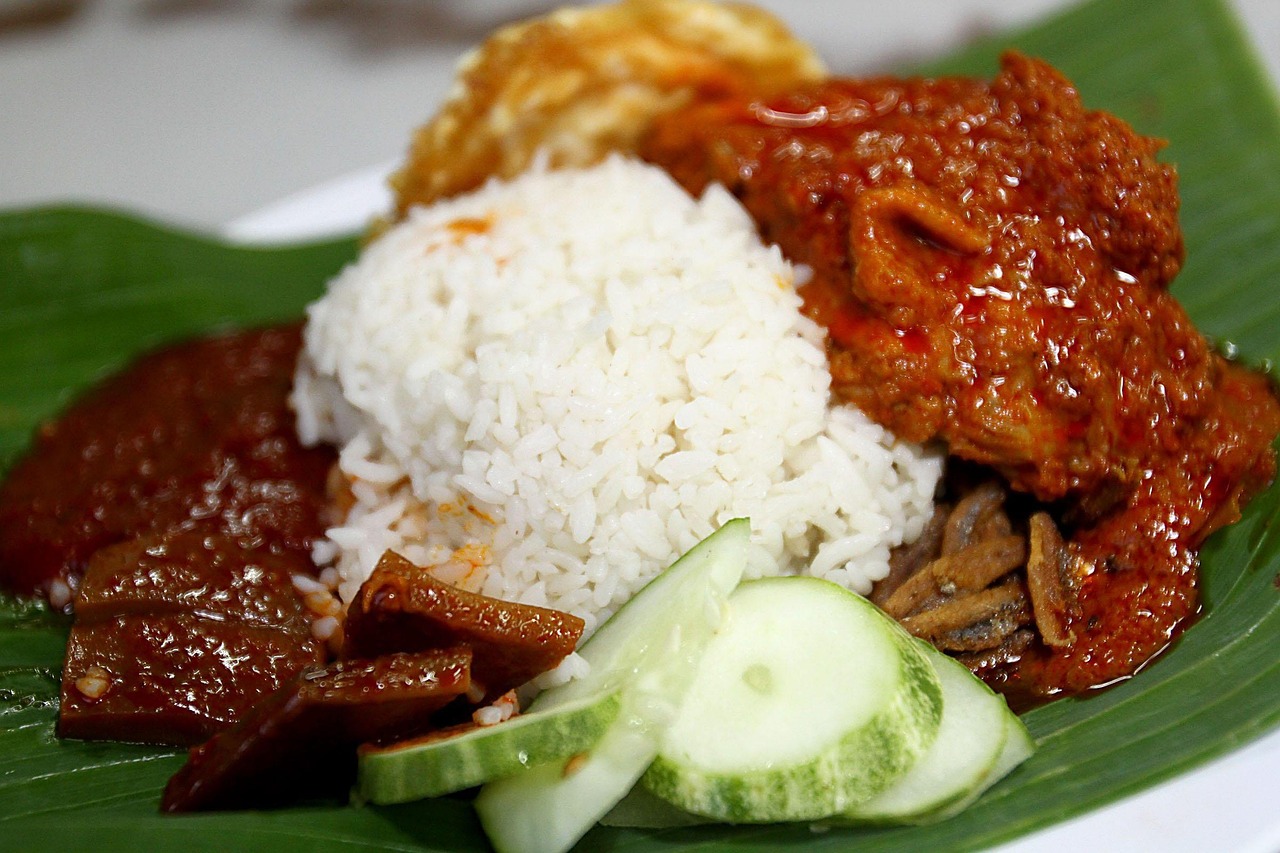
The banana leaf wrapping was never meant to be beautiful — it was practical, alive, and scented the rice with a grassy breath of earth. It kept the meal warm, clean, and portable, as though nature itself was holding the food gently in its palm.
Somewhere along the journey, as the world praised imported superfoods and trendy diets, a surprising plot twist unfolded:
nasi lemak was voted one of the most healthy breakfasts in the world.
A dish once seen as “too rich” was suddenly celebrated internationally for being balanced, complete, and deeply intelligent. What scientists recognised in laboratories, our ancestors had already understood in their senses.
Coconut milk offered steady energy.
Sambal warmed the body and sharpened the spirit.
Anchovies and peanuts gave protein, minerals, and crunch.
Cucumber cooled everything with quiet grace.
This was nourishment the region knew instinctively — the kind that made you feel whole, not restricted. The kind that lived in memory as much as in the body.
And then there is the sambal, the mischievous storyteller on the plate.
Sweet in one home, fiery in another, tarter by the sea, heavier with onions in the kampung. Each version reveals a family’s identity, personality, and secret debates about who makes it better. Sambal tells the truth that nutrition often forgets: food is emotional, personal, alive.
As Malaysia grew, nasi lemak travelled — from fishing villages to morning markets, from school canteens to mamaks, from grandmother’s kitchens to cafés that call it “elevated.” It changed outfits but never its soul. Whether served with fried chicken, rendang, paru, sotong, tofu, or tempeh, its heart remained coconut, rice, sambal, leaf, memory.
And this is where the story folds into something deeper.
Nasi lemak is not a “guilty pleasure.”
It is a record of land, labour, and love.
A quiet demonstration that nutrition has always lived here, in our soil, our plants, our traditions — long before wellness became an industry.
At KHASIAT, we see nasi lemak not as a symbol of indulgence, but as evidence that health can be local, intuitive, and joyful. A reminder that the foods we grew up with are not mistakes to correct but wisdoms to understand.
So the next time you unwrap that warm green parcel and a cloud of fragrant steam rises toward you, pause for a moment.
You are not just about to eat breakfast.
You are stepping into a story — of ancestors who trusted their land, of flavours that travelled across generations, and of nourishment that continues to feed the region not just with calories, but with identity and belonging.
This is nasi lemak.
Rich in flavour.
Rich in history.
Rich in khasiat.
By Chun Ting from Khasiat
Chun Ting is a Malaysian Registered Nutritionist specializing in regional public health and metabolic wellness. Over a 20-year career spanning Southeast Asia, he knows that the secret to healthy communities isn’t found in imported wellness trends—it’s found locally. Backed by a Bachelor’s from Universiti Putra Malaysia (UPM) and a Master’s from the London School of Hygiene & Tropical Medicine (LSHTM), Chun Ting bridges the gap between complex science and daily life—translating nutritional data into fun, practical lifestyle hacks that protect both your health and your love for local food.