
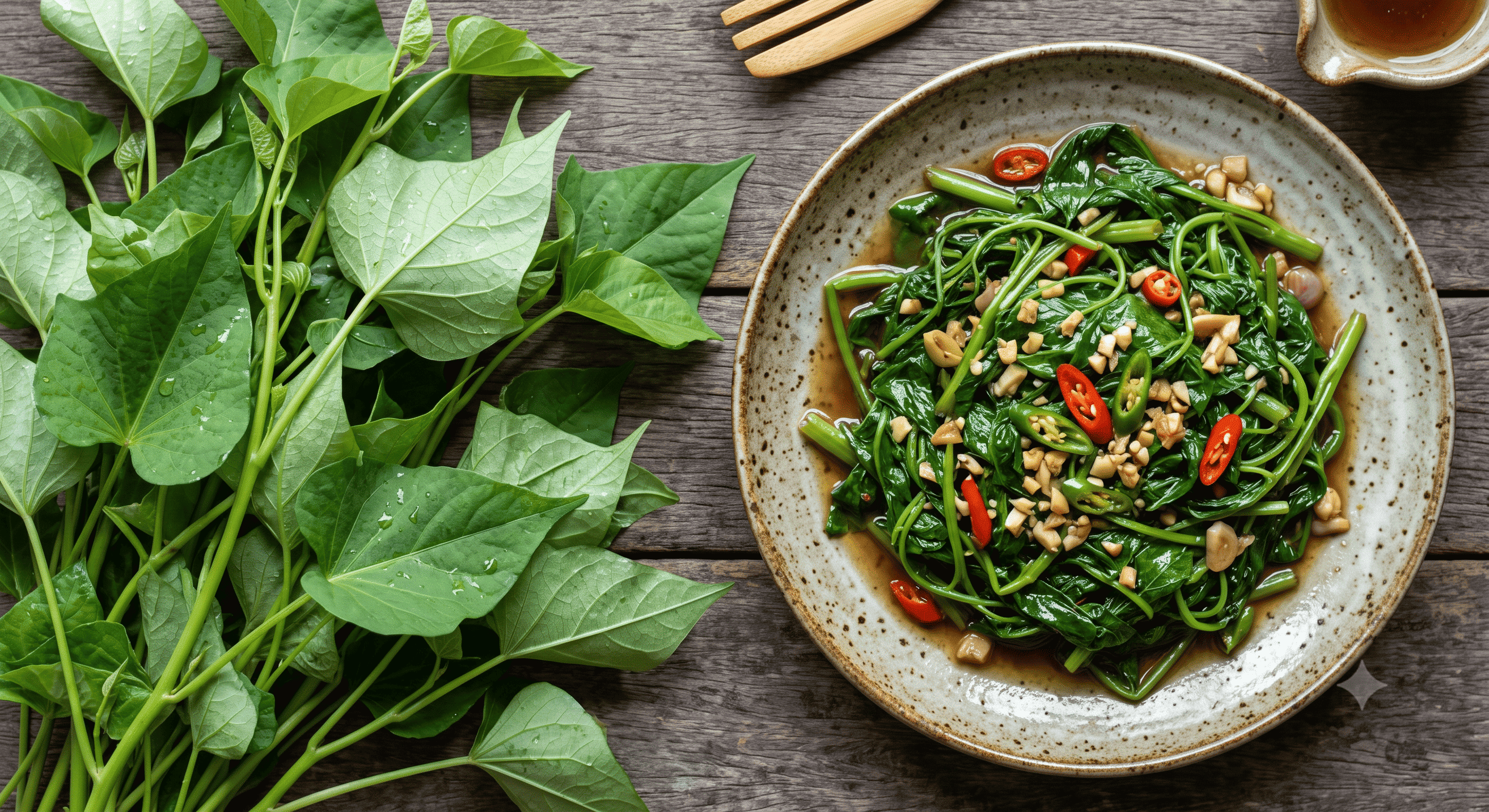

When most people hear “sweet potato,” they picture the vibrant orange tubers baked underground. But above the soil sits one of the best-kept culinary secrets in Asia: sweet potato leaves.
Often called sweet potato greens, 地瓜苗, or Camote tops, these tender greens are widely celebrated across Southeast and East Asia as a staple delicacy. Thanks to their extraordinary nutrient profile, they’ve earned a famous nickname: the “Longevity Vegetable.”
What Are Sweet Potato Leaves?
Sweet potato leaves (Ipomoea batatas) are the leafy tops and stems of the sweet potato plant.
Unlike regular white potato plants (Solanum tuberosum)—which belong to the nightshade family and have toxic leaves—sweet potatoes belong to the Morning Glory family. Their leaves are 100% edible, safe, and delicious. When cooked, they offer a mild, slightly sweet flavor with a silky texture that lacks the harsh metallic bite common to other dark greens.
Thriving in warm, tropical, and subtropical climates, sweet potato greens are exceptionally hardy, heat-tolerant, and easy to cultivate. They are heavily featured in regional cuisines throughout Southeast Asia (Malaysia, Singapore, Indonesia, Thailand, the Philippines) as well as Taiwan, Southern China, and Japan.
Why Are They Called the “Longevity Green”?
The title “Longevity Green” isn’t just a marketing buzzword—it is rooted in both traditional Asian diets and modern cellular biology.
The connection between sweet potato greens and long lifespans first gained global attention in Okinawa, Japan—one of the world’s primary “Blue Zones,” where people routinely live past 100 with unusually low rates of age-related disease. Historically, when staple grains were scarce, Okinawans relied heavily on the sweet potato plant, eating both the nutrient-dense roots and the vibrant green leaves daily.
Modern science explains why this humble plant promotes long-term cellular health:
Cellular Protection via Nrf2 Activation
At the core of aging is oxidative stress—the gradual cellular damage caused by free radicals that leads to wrinkles, organ decline, and disease. Sweet potato leaves are packed with caffeoylquinic acid derivatives and quercetin, bioactive compounds that don’t just neutralize free radicals on contact; they actually stimulate the body’s Nrf2 pathway. This acts as a master switch that triggers your cells to produce their own natural anti-aging enzymes.
High Anti-Inflammatory Profile (“Anti-Inflammaging”)
Chronic, low-grade inflammation is a primary driver of age-related conditions like heart disease, diabetes, and dementia. Sweet potato leaves contain at least 15 different anthocyanins and 6 major polyphenolic compounds. Together, these bioactives help suppress pro-inflammatory pathways (like NF-kappaB), protecting tissues from premature wear and tear.
Metabolic & Blood Sugar Regulation
Spikes in blood sugar accelerate a process called glycation, where excess sugars bind to proteins and collagen, causing premature tissue aging and metabolic dysfunction. Research shows that extracts from sweet potato greens help improve insulin sensitivity and regulate post-meal glucose levels, protecting the vascular system from sugar-induced degradation.
Vascular & Heart Health Protection
Longevity relies heavily on arterial health. The combined power of high potassium (which balances sodium and lowers blood pressure) and Vitamin K (which prevents calcium from depositing in arteries) helps keep blood vessels flexible and youthful.
The “Hidden” Superpowers Most People Don’t Know About
While most greens offer basic vitamins, sweet potato leaves carry unique bio-compounds that solve distinct modern health challenges:
🛡️ Nature’s Blue Light Shield (Screen-Fatigue Defense)
While carrots get all the credit for eye health, sweet potato leaves are exceptionally rich in Lutein and Zeaxanthin. These compounds physically accumulate in the macula of your eyes, acting as internal “sunscreen” that filters out high-energy blue light from smartphones, computer screens, and artificial lighting, helping to reduce digital eye strain.
💪 High-Quality Plant Protein & Amino Acids
Most leafy greens consist almost entirely of water and insoluble fiber with negligible protein. On a dry-weight basis, sweet potato leaves carry a surprisingly high concentration of complete plant protein containing all essential amino acids (including leucine, lysine, and isoleucine)—making them a hidden powerhouse for muscle recovery and plant-based nutrition.
🦠 Natural Gut Protection & Antimicrobial Defense
Specific bioactive polysaccharides in sweet potato leaves act as natural antimicrobials against harmful opportunistic gut microbes (like E. coli) while simultaneously serving as prebiotics that feed your beneficial gut flora.
While every leafy green brings its own valuable nutrition to the table, sweet potato leaves possess a few unique characteristics that make them particularly easy on the body and gentle on the planet:
Gentler Digestive & Mineral Absorption Profile: Some popular dark greens contain high levels of oxalic acid, which can hinder mineral absorption and may not agree with everyone’s digestive system. Sweet potato leaves naturally contain significantly lower levels of oxalates (less than one-fifth of what is found in spinach), making them an exceptionally gentle option for sensitive stomachs and kidney health.
A Model of Regenerative, Zero-Waste Agriculture: Sweet potato vines are remarkably hardy, thriving natively in warm climates with minimal need for intensive farming inputs or synthetic pesticides. Because the plant naturally regenerates after harvesting, a single crop yields two distinct nutritious foods—rich roots underground and continuous, fresh greens above ground—making it a champion of sustainable, zero-waste gardening.
Sweet potato leaves prove that sometimes the best food are the ones hiding in plain sight. Sustainable, nutrient-dense, screen-protective, and effortless to cook, this “Longevity Green” is proof that eating well for your long-term health doesn’t have to be complicated.
By Chun Ting from Khasiat
Chun Ting is a Malaysian Registered Nutritionist specializing in regional public health and metabolic wellness. Over a 20-year career spanning Southeast Asia, he knows that the secret to healthy communities isn’t found in imported wellness trends—it’s found locally. Backed by a Bachelor’s from Universiti Putra Malaysia (UPM) and a Master’s from the London School of Hygiene & Tropical Medicine (LSHTM), Chun Ting bridges the gap between complex science and daily life—translating nutritional data into fun, practical lifestyle hacks that protect both your health and your love for local food.