
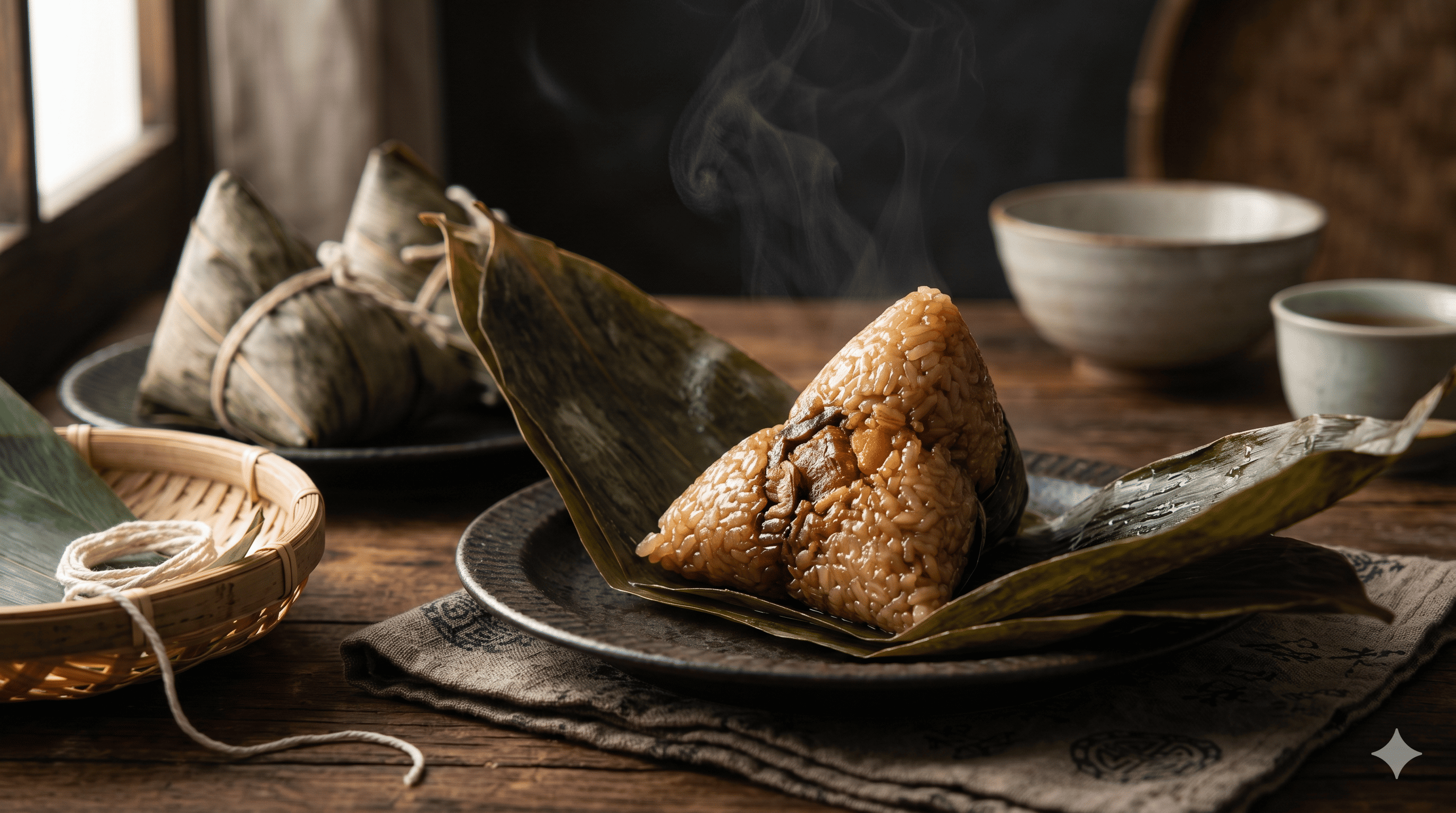

During the Dragon Boat Festival (端午节), the rich, savory aroma of freshly steamed Bak Chang (粽子) fills the air. But as we enjoy this festive favorite made from traditional glutinous rice, a familiar wave of panic arrives right on schedule.
Many people including health professionals, fitness coaches, and calorie-focused influencers flood our feeds with warnings about sticky rice. They brand it a reckless “sugar bomb,” a heavy carbohydrate load, and a guaranteed blood sugar nightmare.
Yet, for thousands of years, glutinous rice (Oryza sativa var. glutinosa) has been the literal culinary heartbeat of Southeast Asia. It is the soul behind beloved heritage staples like bubur pulut hitam, lemper, and ข้าวเหนียวมะม่วง – khao niao mamuang (mango sticky rice). This begs a massive question: Is sticky rice truly the worst rice option you can choose?
As a gut health nutritionist, I say it is time to bring some long-overdue culinary justice to this deeply misunderstood grain, and dive into the fascinating, thousand-year history and hidden molecular realities of starch.
Children of Sticky Rice – Luuk Khao Niew
In Laos and Northeast Thailand (Isan), locals proudly call themselves luuk khao niew (ลูกข้าวเหนียว / ລູກເຂົ້າໜຽວ)—literally, “children of sticky rice.” Here, the grain is not a simple side dish; it is a profound marker of identity.
Historically, this bond was so powerful it defined geographical borders. When French colonizers were mapping French Indochina, they realized they could identify cultural boundaries simply by looking at the dinner table. Where loose, long-grain rice was eaten, Chinese and Vietnamese influences predominated. But the moment steaming bamboo baskets (thip khao) appeared, the colonizers knew they had crossed into a distinct Lao-Isan cultural zone.
Far from a reckless “empty carb,” this grain was an evolutionary necessity. Laos has the highest per capita consumption of sticky rice globally and boasts over 3,200 indigenous varieties. Over millennia, local farmers meticulously selected these native strains because their unique starch density provided long-lasting energy for grueling manual labor in the tropical heat.
By dismissing sticky rice as a modern health hazard, diet culture completely erases a brilliant, ancestral agricultural miracle.
The Molecular Reality of Starch
To understand why sticky rice behaves the way it does, we have to look under the microscope. All starch is made of glucose, but how those molecules are arranged changes everything:
- Amylose (The Straight Line): Regular long-grain rice (like Basmati) contains a high percentage of amylose, which forms long, straight lines that pack together tightly like stacked logs. Because they are compact, your digestive enzymes can only clip away at the ends, leading to a slow, steady release of sugar.
- Amylopectin (The Branched Tree): Glutinous rice is a genetic marvel—it contains nearly 100% amylopectin and virtually zero amylose. Amylopectin looks like a massive, highly branched bush.
When steamed, this branched bush swells with water (gelatinization), creating that signature chewy, sticky texture. Because this structure is completely open and spread out, your digestive enzymes can attack thousands of branches simultaneously.
This is exactly why freshly steamed, piping hot white sticky rice has a high Glycemic Index (GI ~ 90-100). Your body breaks it down into glucose very quickly. However, eating it hot and in isolation is rarely how sticky rice is actually consumed in traditional cultures.
The Gut Health Magic of RS3 and RS5
As a gut health specialist, this is where the story gets exciting. Traditional preparation methods completely rewrite the metabolic profile of this grain by creating Resistant Starch (RS)—carbohydrates that resist human digestion and travel intact to your large intestine to feed your good bacteria.
When we prepare sticky rice traditionally, we unlock two hidden metabolic superpowers:
1. The Cooling Phase: Type 3 Resistant Starch (RS3)
Traditional sticky rice is rarely eaten boiling hot straight from the pot; it is steamed, laid out to cool slightly, and enjoyed at room temperature. As the temperature drops, the starch chains undergo retrogradation, locking into a hardened, crystalline pattern that your digestive enzymes can no longer easily cut.
- The Clinical Impact: Researchers discovered that while freshly cooked white rice contains just (0.64g/100g) of resistant starch, cooling the rice for 24 hours at 4°C and reheating it causes that number to skyrocket to (1.65g/100g). When fed to adults, this structural rearrangement flattens the glycemic response curve, lowering post-meal blood sugar spikes by 20% to 35%. This resistant starch lands in your colon, fermenting into Short-Chain Fatty Acids (SCFAs) like butyrate, which actively fuel and heal your intestinal lining.
2. The Fat Shield: Type 5 Resistant Starch (RS5)
This brings us back to the classic Bak Chang or a rich plate of mango sticky rice. When you cook sticky rice in the presence of traditional fats (like lard, sesame oil, or coconut milk), you form Starch-Lipid Complexes (RS5).
The fatty acids physically wrap themselves inside the core of the starch chains.
- The Clinical Impact: Unlike RS3, which can melt away if you reheat the food too hot, RS5 is incredibly heat-stable up to 140°C. It completely survives the reheating process. The fat acts as a permanent physical shield, blocking pancreatic enzymes from spiking your blood sugar while delivering premium prebiotic fiber straight to your microbiome.
Embrace Health and Heritage
True health is never found by completely divorcing yourself from your cultural heritage or looking at food exclusively as a math problem on a spreadsheet.
Glutinous rice is a triumph of traditional food architecture. By understanding the science of how it cooks, cools, and pairs with traditional fats, we can completely strip away the “sugar bomb” label and welcome this beautiful staple back to the table—with a happy gut, stable energy, and zero guilt.
By Chun Ting from Khasiat
Chun Ting is a Malaysian Registered Nutritionist specializing in regional public health and metabolic wellness. Over a 20-year career spanning Southeast Asia, he knows that the secret to healthy communities isn’t found in imported wellness trends—it’s found locally. Backed by a Bachelor’s from Universiti Putra Malaysia (UPM) and a Master’s from the London School of Hygiene & Tropical Medicine (LSHTM), Chun Ting bridges the gap between complex science and daily life—translating nutritional data into fun, practical lifestyle hacks that protect both your health and your love for local food.