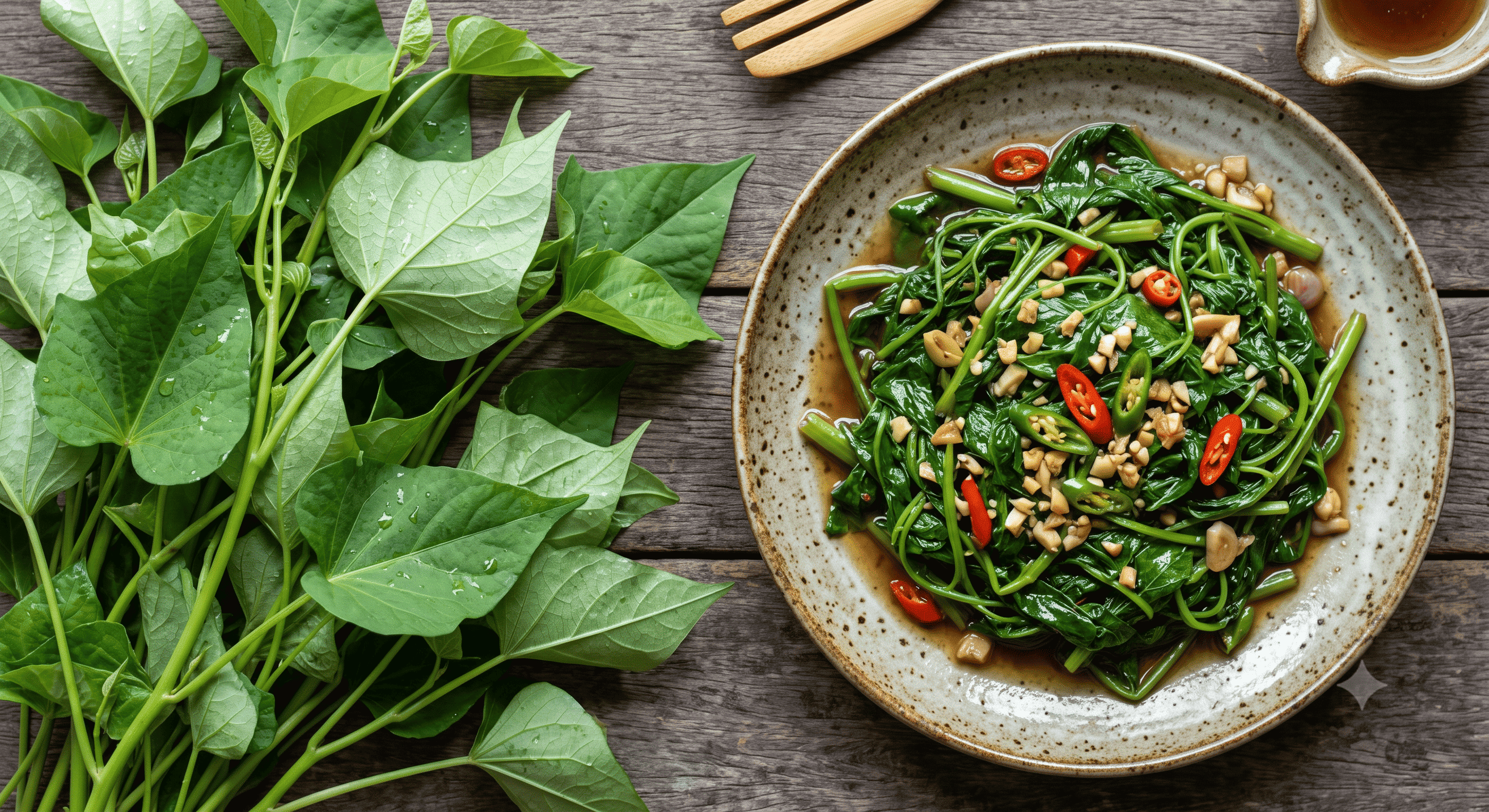

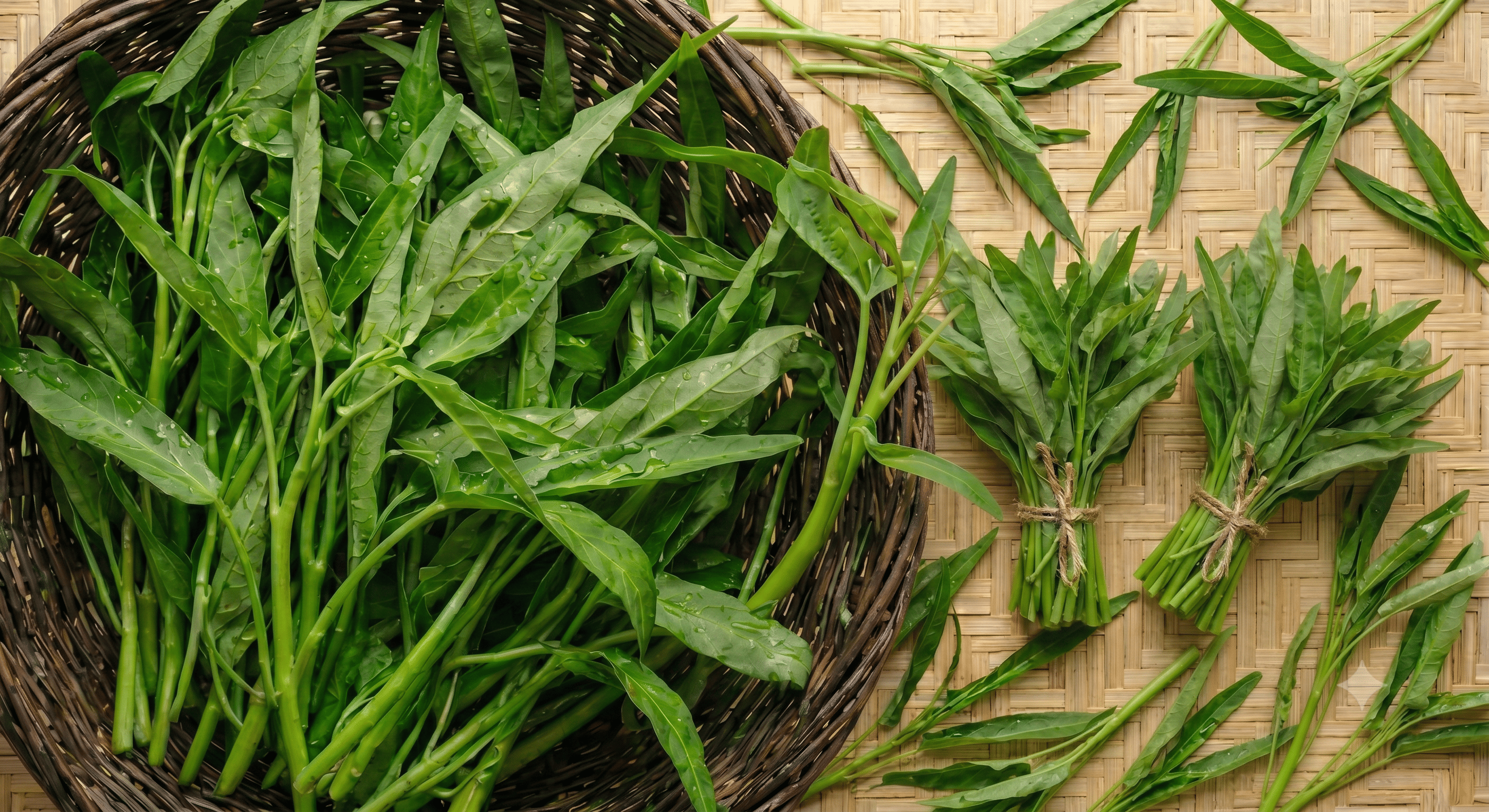

We live in a wellness culture that loves to equate a high price tag with high nutritional value. We willingly hand over hard-earned cash for imported kale, organic açai bowls, and trendy powdered supplements because we’ve been subtly conditioned to believe that if a food is expensive, it must be a superfood.
Across Southeast Asia, Kangkung is the ultimate culinary equalizer. It is the smoky, fiery Kangkung Belacan sizzling in Malaysian woks; the comforting, blanched Plecing Kangkung in Indonesia; the iconic, high-heat street food Pak Boong Fai Daeng in Thailand; and the sour, soul-warming green floating in a Filipino Sinigang.
Because Kangkung is cheap, grows effortlessly, and is widely available, we treat it like a filler green. But from a cellular, biochemical standpoint, science tells a completely different story.
Kangkung Battle: The Head-to-Head Nutritional Profile
To understand just how potent Kangkung is, let’s pit it against two of the most universally recognized health icons.
The Iron Duel: Kangkung vs. Western Spinach
For decades, Popeye’s spinach has been touted as the gold standard for plant-based iron. On paper, raw regular spinach packs about 2.7mg of iron per 100g, while raw Kangkung sits at roughly 1.67mg.
However, we also know that spinach is packed with oxalates—compounds that bind to iron and block your body from absorbing it. Kangkung has a much lower oxalate profile and boasts 55mg of native Vitamin C per 100g. Vitamin C chemically alters plant-based iron, making it highly bioavailable. Your body actually absorbs the iron in Kangkung far more efficiently.
The Potassium Clash: Kangkung vs. Bananas
Whenever fitness enthusiasts complain of muscle cramps or water retention, the immediate advice is to eat a banana for potassium.
Let’s look at the math: A 100g serving of banana provides about 358mg of potassium—but it also comes with 89 calories and 12g of sugar. Raw Kangkung delivers a staggering 312mg of potassium per 100g for a mere 19 calories and zero sugar. For anyone tracking their macros or managing their blood sugar, Kangkung is the ultimate low-calorie fluid-balance weapon.
Protein in Kangkung is Equivalent to An Egg?
Did you know that just 2 to 3 cups of cooked Kangkung can provide 4–6g of clean plant protein for under 50 calories? For comparison, a large whole egg provides roughly 6g of protein—making this humble green an incredible low-calorie protein volume tool.
However, it isn’t an exact biochemical match to an egg because its amino acid distribution isn’t the same; it is naturally a little lower in sulfur-containing amino acids, specifically methionine.
The Smart Pairing Fix: To unlock its full potential, pair your Kangkung with grains (like rice), garlic, or sesame seeds. The compounds in these ingredients perfectly complete Kangkung’s amino acid puzzle, creating a total protein profile that mirrors animal protein.
Kangkung contains all 9 essential amino acids. In the plant kingdom, finding a “complete protein” source is incredibly rare, and finding it in a cheap, local leafy green is almost unheard of. It specifically outperforms luxury Western greens in Leucine—tthe critical, highly prized branch-chain amino acid (BCAA) that acts as the direct biological “on-switch” for muscle protein synthesis and athletic recovery.
The Mind-Blowing Insights
- The Anti-Sugar Blood Buffer: Kangkung contains unique Triterpenoid Saponins and Quercetin Glycosides that naturally inhibit alpha-glucosidase—the enzyme responsible for breaking down carbohydrates into glucose. Eating Kangkung alongside a bowl of white rice or noodles acts as a literal metabolic brake. By slowing down glucose absorption in your gut, it naturally triggers your body to release more GLP-1 (the hormone responsible for fullness and insulin regulation), preventing post-meal energy crashes.
- The Post-Workout Cortisol Crusher: Boasting 71mg of bioavailable Magnesium per 100g alongside potent neuroprotective flavonoids like Luteolin, Kangkung contains organic compounds that exert a mild, calming effect on the central nervous system. It’s the perfect evening veggie for athletes looking to lower stress, lower cortisol, and improve sleep recovery.
- The Sourcing Secret (Phytoremediation): Because it acts like a cellular sponge, always ensure you buy your greens from reputable grocery stores or clean, commercially farmed markets. When grown in clean environments, this natural ‘sponge’ effect works in your favor, packing the plant with pure, cell-protecting antioxidants instead.
It’s time to stop letting a cheap price tag trick us into thinking a food lacks value. Kangkung isn’t just a basic side dish; it is a localized metabolic buffer, a muscle-recovery aid, and a high-bioavailability powerhouse hiding in plain sight.
Next time you go grocery shopping, bypass the expensive, imported kale section. Go back to Kangkung Belacan, Plecing Kangkung, Pak Boong Fai Daeng, or Sinigang. Your body—and your wallet—will thank you.
By Chun Ting from Khasiat
Chun Ting is a Malaysian Registered Nutritionist specializing in regional public health and metabolic wellness. Over a 20-year career spanning Southeast Asia, he knows that the secret to healthy communities isn’t found in imported wellness trends—it’s found locally. Backed by a Bachelor’s from Universiti Putra Malaysia (UPM) and a Master’s from the London School of Hygiene & Tropical Medicine (LSHTM), Chun Ting bridges the gap between complex science and daily life—translating nutritional data into fun, practical lifestyle hacks that protect both your health and your love for local food.